 Image 1 of 1
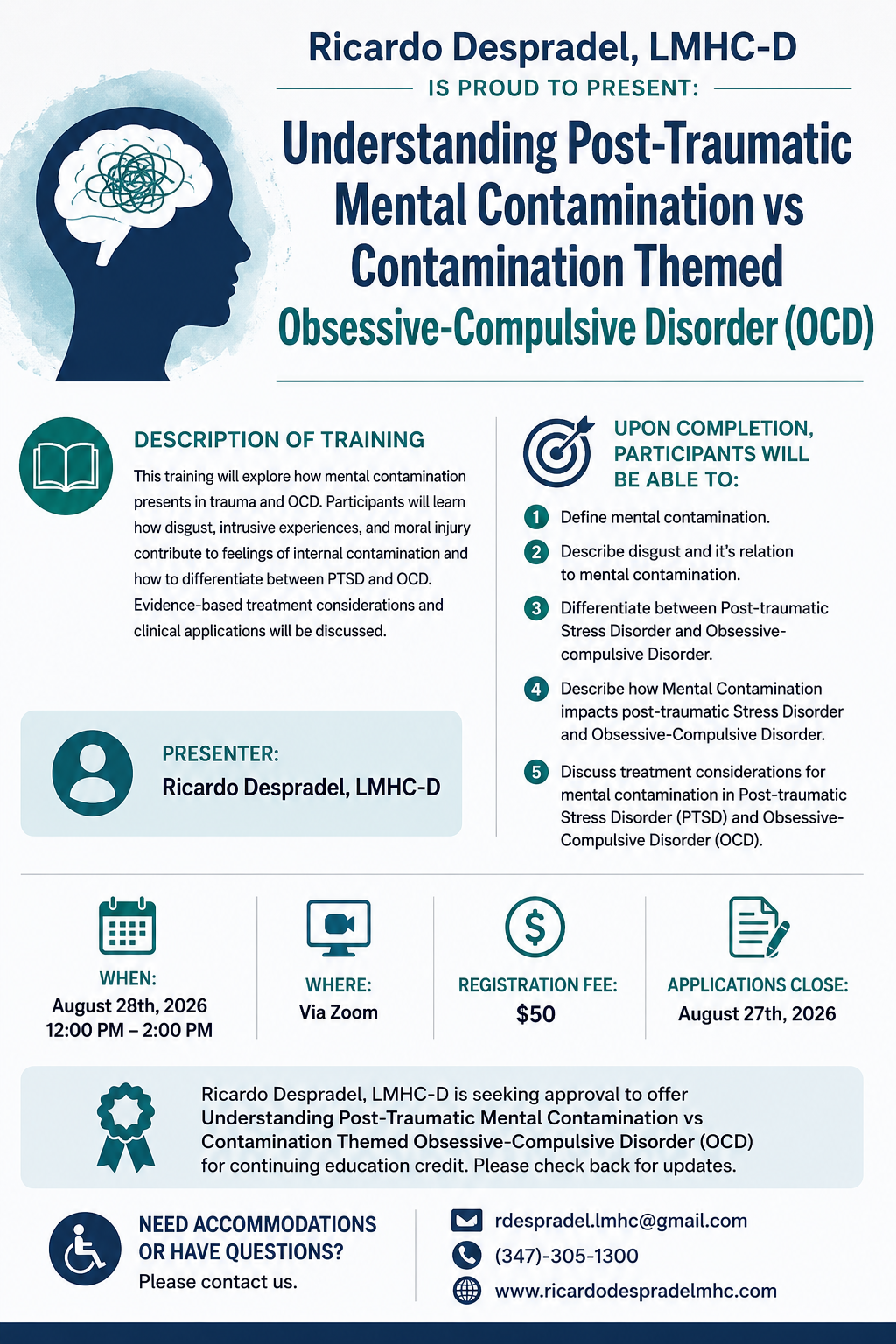
This training offers a clinically grounded exploration of how mental contamination manifests across trauma and OCD presentations, with a focus on differential diagnosis and evidence-based treatment. Participants will examine the role of disgust, moral injury, and trauma-related cognitions in shaping internal experiences of “dirtiness,” and how these processes differ from contamination fears driven by OCD. Through case examples and current research, the training highlights the functional relationship between PTSD symptoms and mental contamination, as well as the behavioral patterns that maintain both conditions. Attendees will also gain practical insight into treatment approaches, including Prolonged Exposure (PE) for trauma and Exposure and Response Prevention (ERP) for OCD, with emphasis on clinical decision-making and tailored intervention strategies.
Program Agenda
12-12:10PM Introduction/Overview of the Program Learning Objectives (Lecture)
12:10-12:20 PM Mental Contamination & Disgust
Defining Mental Contamination
Defining Disgust
Comparing Disgust Sensitivity & Disgust Propensity
12:20-12:50 PM Overview of Post-Traumatic Stress Disorder (PTSD)
PTSD Diagnostic Criteria
Mental Contamination in PTSD
Case Example
Prolonged Exposure for PTSD
Examples
Avoidance
12:50-1:30 PM Overview of Obsessive-Compulsive Disorder (OCD)
OCD Diagnostic Criteria
Contamination Theme OCD
Case Example
Law of Contagion
Inhibitory Learning
Exposure and Response Prevention for OCD
Examples
1:30-1:45 PM Diagnosis and Treatment
Differential Diagnosis
Treatment Considerations
Role of Avoidance in Treatment
1:45-2:00pm Q&A
This training offers a clinically grounded exploration of how mental contamination manifests across trauma and OCD presentations, with a focus on differential diagnosis and evidence-based treatment. Participants will examine the role of disgust, moral injury, and trauma-related cognitions in shaping internal experiences of “dirtiness,” and how these processes differ from contamination fears driven by OCD. Through case examples and current research, the training highlights the functional relationship between PTSD symptoms and mental contamination, as well as the behavioral patterns that maintain both conditions. Attendees will also gain practical insight into treatment approaches, including Prolonged Exposure (PE) for trauma and Exposure and Response Prevention (ERP) for OCD, with emphasis on clinical decision-making and tailored intervention strategies.
Program Agenda
12-12:10PM Introduction/Overview of the Program Learning Objectives (Lecture)
12:10-12:20 PM Mental Contamination & Disgust
Defining Mental Contamination
Defining Disgust
Comparing Disgust Sensitivity & Disgust Propensity
12:20-12:50 PM Overview of Post-Traumatic Stress Disorder (PTSD)
PTSD Diagnostic Criteria
Mental Contamination in PTSD
Case Example
Prolonged Exposure for PTSD
Examples
Avoidance
12:50-1:30 PM Overview of Obsessive-Compulsive Disorder (OCD)
OCD Diagnostic Criteria
Contamination Theme OCD
Case Example
Law of Contagion
Inhibitory Learning
Exposure and Response Prevention for OCD
Examples
1:30-1:45 PM Diagnosis and Treatment
Differential Diagnosis
Treatment Considerations
Role of Avoidance in Treatment
1:45-2:00pm Q&A